



Estates leaders face a growing pressure point: demand for space is rising, but capital budgets, carbon commitments, and operational constraints are tightening. For many education providers, school expansion is no longer simply about adding new buildings or increasing floor space. Instead, leaders are looking at how they can create additional capacity through a combination of new development, refurbishment, and smarter use of existing estates. For senior FM and estates professionals at the Education Forum, space creation is increasingly a capital planning exercise rooted in sustainability, lifecycle value, and strategic prioritisation.
School Expansion vs Creating Space Within Existing Estates
While school expansion traditionally refers to increasing an institution’s physical capacity through new buildings or extensions, many estates teams are now taking a broader approach. Creating space does not always require construction from scratch; it can also involve adapting existing buildings, repurposing underused areas, or improving how current facilities are utilised.
This distinction is becoming increasingly important as education providers balance growing demand with net zero commitments. A new-build project may provide additional capacity, but refurbishing existing assets can often deliver similar benefits with a lower carbon impact and reduced cost.
As a result, modern capital planning is focused on finding the most sustainable way to create space, whether through targeted expansion, estate optimisation, or a combination of both.
Retrofit-First Is Becoming the Default
One of the strongest trends shaping education estates is the move towards retrofit-first capital strategies. Rather than automatically pursuing new-build expansion, many organisations are prioritising refurbishment, reconfiguration, and repurposing of existing assets.
This approach can be faster, more cost-effective, and significantly lower carbon than construction from the ground up. Capital investment is increasingly being directed towards projects such as:
- Improving building fabric and insulation
- Upgrading heating, ventilation, and energy systems
- Converting unused areas into teaching or community spaces
- Creating flexible environments that support multiple uses
By unlocking capacity within existing buildings, estates teams can support growth while improving the overall performance and efficiency of their campuses.
Modular and Low-Carbon Construction for Targeted Growth
Where additional buildings are unavoidable, modular construction is becoming an increasingly attractive option for sustainable school expansion.
Modern modular solutions allow education providers to add capacity quickly while offering greater cost certainty and reduced construction waste. They can also provide flexibility, with buildings that can be adapted, extended, or relocated as pupil numbers and curriculum requirements change.
For capital planning teams, the key is ensuring modular projects are assessed through a whole-life approach. Whole-life carbon and whole-life cost analysis help decision-makers understand not just the initial investment, but the long-term environmental and operational impact.
Linking Space Planning with Energy and Operational Costs
Creating additional space is not only a capital decision; it is also an ongoing operational commitment. Every new classroom, teaching area, or facility brings additional requirements for heating, lighting, maintenance, cleaning, and compliance.
Leading estates teams are therefore integrating energy modelling and operational analysis into early planning stages. The question is no longer simply, “Can we create more space?” but rather, “Can we operate this space efficiently for the next 20 years?”
This approach is particularly important for large FE colleges and universities with extensive estates, where long-term operational costs can significantly influence financial sustainability.
Building the Business Case for Sustainable Growth
Capital funding decisions are becoming increasingly focused on projects that deliver multiple benefits. Estates leaders need to demonstrate that space creation supports wider institutional priorities, including:
- Improved building utilisation
- Reduced carbon emissions
- Better student and staff experiences
- Enhanced compliance and safety
- Lower long-term operating costs
The strongest business cases often combine capacity creation with sustainability improvements. For example, a refurbishment project that creates additional teaching space while improving energy efficiency may deliver greater value than a standalone expansion project.
Strong governance and prioritisation frameworks are essential to ensure investment is directed towards projects that provide the greatest long-term impact.
Expanding Smarter, Not Simply Bigger
Education estates are entering a period where growth must be carefully planned. Successful school expansion will not simply be measured by the amount of new space created, but by how effectively that space supports learning, sustainability, and financial resilience.
By prioritising retrofit opportunities, using low-carbon construction where needed, and integrating sustainability into every capital decision, estates leaders can create environments that meet future demand without compromising net zero ambitions.
The future of education expansion is about making smarter use of space: building where necessary, adapting where possible, and ensuring every investment delivers lasting value.
Are you looking for space creating (or saving!) solutions for your institution? The Education Forum can help!
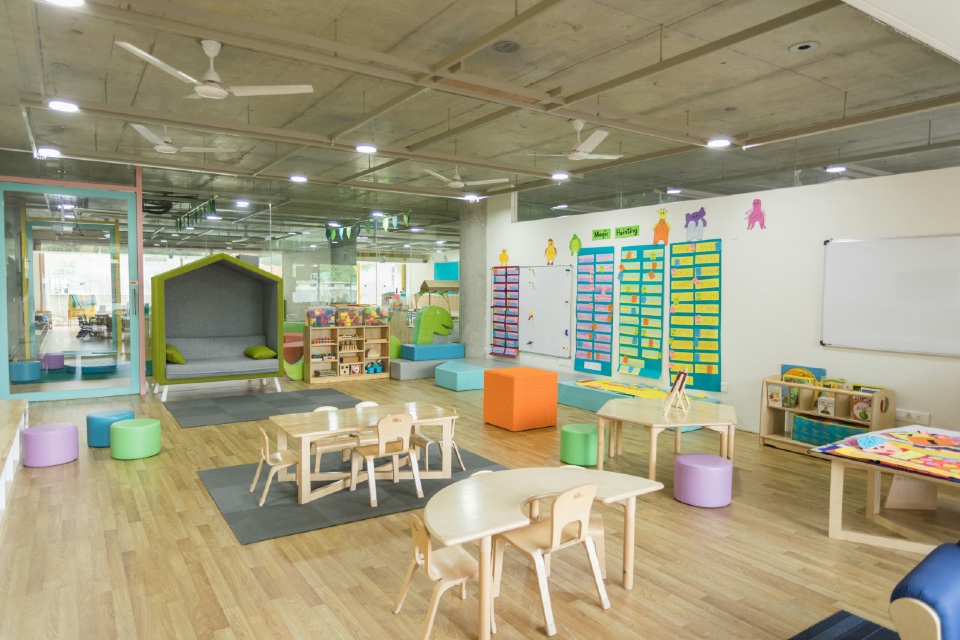
Photo by Matt Hoffman on Unsplash