



Estates leaders face a growing pressure point: demand for space is rising, but capital budgets, carbon commitments and operational constraints are tightening. The challenge is no longer how to expand capacity, but how to do so in a way that supports net zero targets and long-term estate resilience. For senior FM and estates professionals at the Education Forum, space creation is increasingly a capital planning exercise rooted in sustainability, lifecycle value and strategic prioritisation…
Retrofit-first is becoming the default
One of the strongest trends is the shift toward retrofit-first capital strategies. Rather than new-build expansion, many education organisations are prioritising refurbishment, reconfiguration and repurposing of existing assets to unlock capacity.
This approach is often faster, more cost-effective and significantly lower carbon than construction from scratch. Capital planning is therefore moving toward phased investment: upgrading building fabric, improving ventilation and energy performance, and redesigning underused areas into flexible teaching and community spaces.
Modular and low-carbon construction for targeted growth
Where new space is unavoidable, modular builds are playing a larger role. Modern modular solutions allow education estates to add capacity quickly with better cost certainty and lower waste. In capital planning terms, modular also supports flexibility: buildings can be adapted or relocated as student numbers and curriculum needs evolve.
Best practice is to embed whole-life carbon and whole-life cost analysis into business cases, ensuring capital decisions align with long-term sustainability rather than short-term floor area gains.
Space planning linked to energy and operational cost
Creating space is not just a capital issue: it’s an operational one. Every additional square metre brings heating, lighting, maintenance and compliance obligations. Leading estates teams are integrating energy modelling into early-stage planning, asking not only “can we build it?” but “can we operate it sustainably for 20 years?”
This is particularly important for multi-campus universities and large FE estates, where operational cost-to-serve is becoming a critical constraint.
Funding and governance: making the business case stick
Capital planning in education is increasingly competitive. Estates leaders must demonstrate that space projects deliver multiple outcomes: improved utilisation, reduced carbon, better student experience, and compliance with condition and safety requirements.
Strong governance is essential. The most successful organisations prioritise projects that combine capacity creation with decarbonisation, such as refurbishments that also reduce energy intensity, or new spaces designed to support both academic and community use.
Expand smarter, not bigger
Education estates are entering an era where growth must be intelligent. The winners will be those who maximise existing assets, invest strategically, and treat sustainability as a core capital planning principle rather than an added constraint. Creating space on campus is now about building wisely, operating efficiently, and aligning expansion with the realities of net zero and long-term financial resilience.
Are you looking for space creating (or saving!) solutions for your institution? The Education Forum can help!
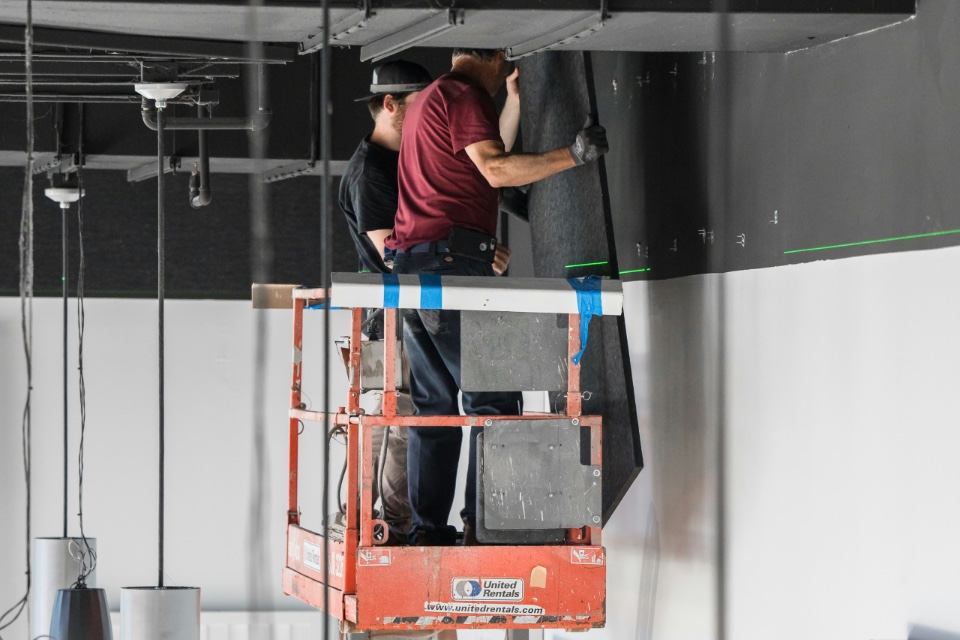
Photo by Matt Hoffman on Unsplash