


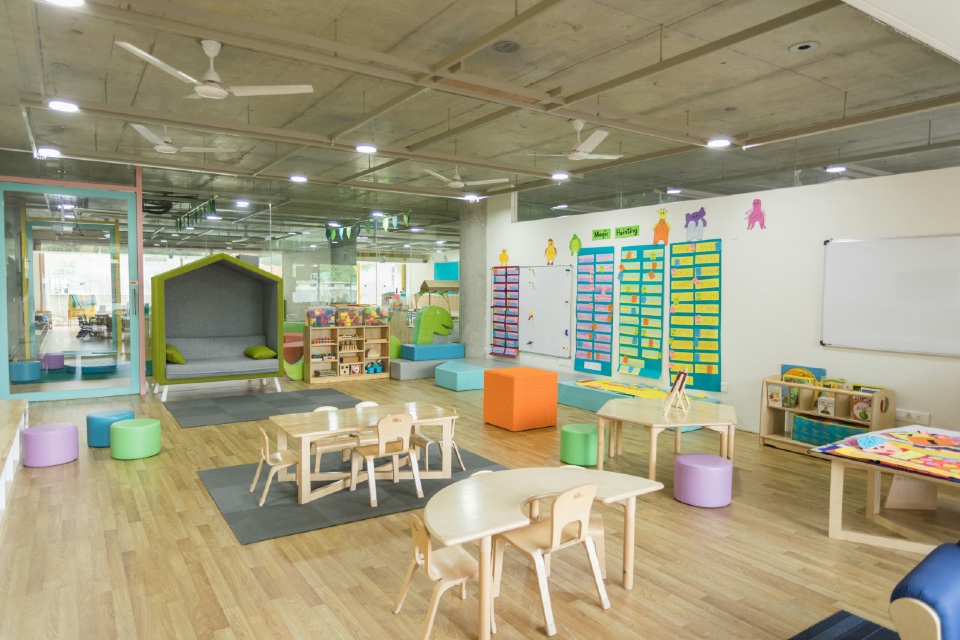
Classroom equipment is often purchased in response to an immediate need. Desks need replacing. Storage is insufficient. Furniture is showing its age. A teaching space needs to accommodate additional pupils or support a different way of learning. But individual purchasing decisions can have a much wider impact on how effectively a classroom functions.
A new set of desks might improve durability while making the room less flexible. Additional storage could solve a practical problem but restrict movement. A classroom refurbishment might look impressive without addressing poor acoustics, uncomfortable temperatures or the needs of pupils requiring additional support.
That makes the starting point for classroom equipment procurement surprisingly simple: What do we need this learning space to help pupils and teachers do?
The answer should determine the equipment, layout, specification and budget, rather than allowing the available product range to dictate how the classroom operates.
Start with the Learning Activity
A classroom is not simply a room containing desks and chairs. It is an environment that needs to support teaching, learning, interaction, concentration, movement and accessibility.
Different activities place different demands on the space. Whole-class instruction might benefit from clear sightlines and a consistent focal point, while group work may require furniture that can be rearranged quickly. Practical activities might need durable surfaces, specialist equipment or easily accessible storage.
Before selecting products, schools should examine how the room is currently used and what prevents it from working effectively.
Teachers should be involved in that discussion. They understand the everyday frustrations that may be invisible during a formal inspection, from insufficient storage to furniture arrangements that make moving between activities unnecessarily difficult.
The objective should not be to create the most modern-looking classroom.
It should be to create a room that works better.
Choose Furniture Around Flexibility
Flexible learning environments have become an important consideration for schools, but flexibility needs to serve a genuine purpose.
Lightweight tables, movable seating and modular furniture can allow classrooms to accommodate different teaching approaches. However, constantly rearranging furniture can itself become disruptive if the layout is poorly planned.
Schools should consider how frequently the room needs to change configuration, how much space is available for movement and whether pupils and staff can move furniture safely.
The right solution may be highly adaptable furniture in one classroom and a more permanent arrangement in another.
A useful question is whether the proposed layout makes transitions between activities easier or simply introduces more furniture to manage.
Make Accessibility Part of the Specification
Classroom equipment should support the needs of all pupils, including those with special educational needs and disabilities (SEND).
This can affect furniture dimensions, access routes, circulation space, visibility, acoustic conditions and the positioning of teaching equipment.
The Department for Education’s Building Bulletin 104 provides area guidance for SEND and alternative provision, while wider school design guidance addresses inclusive and accessible environments.
Schools should therefore evaluate how equipment will work for pupils with different physical, sensory and learning needs.
Adjustable-height furniture may be appropriate in some settings, while particular pupils may need additional space, supportive seating or carefully considered layouts.
Accessibility should not be treated as a specialist addition after the main classroom has been equipped.
It should influence the original design.
Consider the Room Around the Equipment
Furniture is only one component of a successful learning environment.
Lighting, ventilation, temperature, acoustics, flooring and the condition of the building can all affect how effectively a classroom is used.
The Department for Education’s school premises guidance covers requirements including lighting and acoustic conditions, while its Building Bulletins provide more detailed advice on school design.
Poor acoustics, for example, can make communication more difficult, while glare or inadequate lighting can affect the suitability of different teaching positions.
For larger refurbishment projects, these issues should be considered together rather than tackled through disconnected purchasing decisions.
3BM provides architectural design, project management, quantity surveying and cost consultancy services, including experience in education buildings. That type of expertise can help schools approach classroom improvements as coordinated building projects rather than separate equipment purchases.
The guiding principle is straightforward: equipment needs to work with the room, not against it.
Take Storage Seriously
Storage rarely attracts the same attention as furniture or classroom technology.
Yet insufficient or badly positioned storage can undermine both.
Resources left on work surfaces reduce usable teaching space. Equipment stored in distant cupboards creates unnecessary interruptions. Overfilled units can make materials difficult to locate and manage.
Before purchasing additional storage, schools should identify what needs to be stored, who needs access and how frequently different resources are used.
Frequently used materials should be easy to reach, while specialist or less frequently required equipment may be better stored elsewhere.
Storage should also be considered in relation to accessibility, supervision and the safe movement of pupils.
Good storage does more than make a classroom tidier. It makes more of the room available for learning.
Specify Equipment for Durability
Education budgets make initial purchase price important.
But the cheapest classroom furniture may not provide the best long-term value.
Desks, chairs, storage units and other equipment can experience intensive daily use. Products therefore need to withstand repeated movement, cleaning and wear.
Schools should consider the quality of materials, finishes, fittings and components, alongside the availability of replacement parts and any relevant warranties.
Cleaning and maintenance also deserve attention. A product that is difficult to maintain or repair can become expensive over its lifetime even if the original price was attractive.
The useful comparison is not simply purchase cost.
It is the cost of keeping the equipment safe, functional and suitable throughout its expected life.
Decide Whether Refurbishment Offers Better Value
Sometimes the most effective classroom equipment project involves relatively little new equipment.
Reconfiguring an existing layout, improving storage, replacing worn flooring or repairing usable furniture may deliver greater value than a complete replacement programme.
For larger projects, improvements might include decorating, electrical works, lighting alterations or changes to the internal layout.
Grosvenor Contracts is included among the suppliers associated with this classroom equipment category, while 3BM offers design and project-management expertise relevant to education refurbishment and property improvement projects.
Schools should distinguish between problems requiring new products and those caused by the condition or configuration of the existing space.
That can prevent equipment budgets being used to compensate for building problems that remain unresolved.
Involve the Right People Early
Classroom improvements can involve teaching staff, school business managers, estates teams, IT specialists, senior leaders and external contractors.
Their priorities may differ.
Teachers may focus on usability and teaching activities. Estates teams will consider installation and maintenance. IT teams may need to accommodate equipment connections, charging facilities and digital infrastructure. Procurement teams will assess costs and purchasing requirements.
Bringing those perspectives together early can prevent expensive revisions later.
For projects involving building alterations or several suppliers, a clearly defined brief and appropriate project-management arrangements become particularly important.
3BM’s services encompass architecture, project management and cost consultancy, helping organisations coordinate property projects from design through delivery.
Look Beyond the Purchase Price
An effective classroom equipment budget should account for more than the goods themselves.
Delivery, installation, removal of old equipment, disposal, associated building works and any required changes to electrical or other services can all affect overall cost.
Schools should also consider disruption.
Can work be completed during school holidays? Will rooms need to be temporarily relocated? How will contractors access the site safely? Who checks that installation is complete and equipment is ready for use?
Procurement Services provides public-sector purchasing support and access to procurement frameworks, including routes relevant to education, property services and equipment.
Frameworks can help buyers establish compliant purchasing routes and compare suitable suppliers, although schools must still confirm that the specific framework covers their requirement and is available for use.
The goal should be a clear understanding of the whole project cost before commitments are made.
Make Sustainability Practical
Sustainability should be considered alongside durability and whole-life cost.
Products that last longer, can be repaired or adapted, and remain suitable as requirements change may reduce unnecessary replacement.
Schools can also ask about recycled content, responsible material sourcing, packaging, refurbishment options and arrangements for disposing of existing equipment.
However, sustainability should not be reduced to individual product claims.
A durable table that remains in use for many years may provide greater practical value than one purchased principally because of a particular environmental feature.
The question should be how to reduce the resources required to equip and maintain a functional classroom over time.
Test Before Committing to a Wider Rollout
Where a school or multi-academy trust is equipping several classrooms, it can be tempting to standardise immediately.
Standardisation can simplify procurement, maintenance and replacement.
But it also creates the risk of repeating a poor decision across an entire estate.
Testing furniture or a proposed layout in one classroom can reveal practical issues before a wider investment.
Can pupils move comfortably? Can teachers supervise the whole room? Does storage work as intended? Are surfaces easy to clean? Can equipment be rearranged without unnecessary effort?
The most useful feedback may come from staff and pupils after they have used the room for several weeks.
A small pilot can prevent a large procurement mistake.
Questions to Ask Classroom Equipment and Refurbishment Providers
Before selecting suppliers, schools should consider:
- How will the proposed equipment support our teaching activities?
- Can the layout accommodate different lesson formats?
- How will accessibility and SEND requirements be addressed?
- Is the equipment suitable for the pupils’ ages and expected use?
- What materials and finishes are used?
- How durable are the products, and what warranties are provided?
- Can furniture be repaired, adapted or reconfigured?
- What storage solutions are recommended?
- Will installation require additional building or electrical work?
- How will disruption to teaching be minimised?
- What delivery, installation and disposal costs are included?
- Can the supplier provide examples of relevant education projects?
- What maintenance will be required?
- Which procurement routes are available?
- Can a pilot or sample installation be arranged before a wider rollout?
Frequently Asked Questions
What should schools consider when buying classroom equipment?
Schools should assess teaching requirements, pupil needs, accessibility, flexibility, durability, safety, available space, storage and whole-life cost. Equipment should be selected to support how the classroom will actually be used.
What is flexible classroom furniture?
Flexible classroom furniture includes tables, seating and other equipment designed to accommodate different layouts or activities. Its value depends on whether flexibility supports teaching without creating unnecessary disruption.
How can schools make classrooms more accessible?
Accessibility may involve appropriate furniture dimensions, clear circulation routes, suitable layouts, acoustic considerations and equipment that supports pupils with different physical and sensory needs. Requirements should be identified during the initial design process.
Is it better to refurbish a classroom or replace equipment?
That depends on the condition of the existing space and the problems being addressed. Reconfiguration, maintenance or selective refurbishment may provide better value than replacing equipment that remains suitable for use.
How should schools assess classroom equipment costs?
Buyers should consider purchase price alongside delivery, installation, maintenance, repair, replacement, disposal and disruption. Comparing whole-life value can reveal differences that are not apparent from initial quotations.
Product & Services Guide
Grosvenor Contracts
Boasting a dedicated team of over 50 professionals, Grosvenor have emerged as leading specialists in the Supply, Installation, Cleaning, and Maintenance of Blinds, Curtains, Tracks, Window Film, Reupholstery, BBNC, and more within the commercial sector.
Website: https://www.grosvenorcontract.com/
Procurement Services
Public-sector procurement specialist providing access to compliant purchasing frameworks and associated procurement support. Its framework portfolio includes services relevant to education, property refurbishment, equipment and other school requirements.
Website: https://www.procurementservices.co.uk/
3BM
Property consultancy group offering architectural design, project management, quantity surveying and cost consultancy. Its experience in education buildings makes it relevant to schools planning classroom redesign, refurbishment or wider estates improvements.
Website: https://3bm.co.uk/
Buy for the Classroom You Need
The strongest classroom equipment decisions follow a simple progression: learning need → space → equipment → installation → everyday use → review
Start by understanding what pupils and teachers need from the room.
Assess the space and any limitations.
Select equipment that addresses those requirements.
Plan installation so that the finished room is safe and ready for use.
Then review whether the improvements have delivered the intended benefits.
A successful classroom investment should not be measured by how much new equipment has been purchased.
It should be measured by whether the room works better for the people who use it.
The Education Forum brings together senior education decision-makers and relevant solution providers through pre-arranged one-to-one meetings, offering an opportunity to explore classroom equipment, refurbishment, facilities, procurement and other solutions supporting effective learning environments.
Related Reading
This is the first article in our October Classroom Equipment series.
The follow-up will focus on getting more from existing learning spaces: how schools can use furniture reconfiguration, better storage, selective refurbishment and thoughtful equipment choices to create more flexible classrooms without the cost of a complete refit.
Sources
- Department for Education – Standards for School Premises – https://www.gov.uk/government/publications/standards-for-school-premises
- Department for Education – School Design and Construction – https://www.gov.uk/government/collections/school-design-and-construction
- Department for Education – Design Guidance: Building Bulletins – https://www.gov.uk/government/collections/design-guidance-building-bulletins
- Department for Education – Acoustic Design of Schools: BB93 – https://www.gov.uk/government/publications/bb93-acoustic-design-of-schools-performance-standards
- Procurement Services – https://www.procurementservices.co.uk/
- 3BM – https://3bm.co.uk/
- Grosvenor Contracts – https://www.grosvenorcontract.com/
Image credit: Photo by Gautam Arora on Unsplash